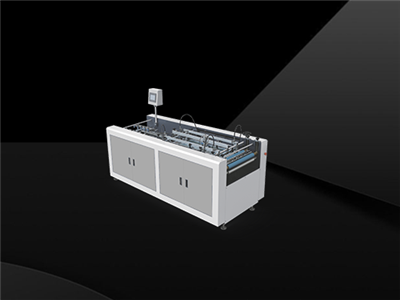

Hey there! As a supplier of box machines, I often get asked about the differences between flat - bed and rotary box machines. So, let's dive right in and break it down.
1. Basic Working Principles
First off, let's talk about how these two types of machines work. A flat - bed box machine, as the name suggests, has a flat working surface. The materials are placed on this flat surface, and the machine performs operations like cutting, creasing, and folding in a relatively straightforward way. It's like doing a craft project on a tabletop, but on a much larger and more automated scale.
On the other hand, a rotary box machine uses rotating cylinders or drums. These rotating parts perform the various functions such as cutting and creasing. The materials are fed through the machine between these rotating elements, which work in a continuous, circular motion. It's a bit like a conveyor belt system, but with the added rotation for the processing.
2. Production Speed
When it comes to production speed, rotary box machines usually have the upper hand. Since they operate in a continuous, circular motion, they can produce boxes at a much faster rate compared to flat - bed machines. For example, in a high - volume production environment where thousands of boxes need to be made in a short period, a rotary machine can churn out boxes like there's no tomorrow.
Flat - bed machines, however, are slower in comparison. They work on one box or a small set of boxes at a time, which means that for large - scale production, you might need multiple flat - bed machines running simultaneously to match the output of a single rotary machine. But if you're doing small - batch production or need to make custom - sized boxes, the slower speed of a flat - bed machine might not be a big deal.
3. Precision and Flexibility
Flat - bed machines are known for their high precision. Because they work on a flat surface, it's easier to control the cutting and creasing operations, especially for complex shapes and designs. If you're making boxes with intricate patterns or need very precise dimensions, a flat - bed machine is the way to go. It's like having a surgeon's precision when it comes to box making.


Rotary machines, while fast, might not offer the same level of precision as flat - bed machines. The continuous rotation can sometimes lead to slight variations in the cutting and creasing, especially for very detailed designs. However, they make up for it in terms of flexibility in terms of production volume. They can handle a wide range of box sizes and materials, as long as they fit within the machine's specifications.
4. Material Compatibility
Both flat - bed and rotary box machines can work with a variety of materials, but there are some differences. Flat - bed machines can handle thicker and more rigid materials better. They have the strength and stability to cut and crease materials like thick cardboard, corrugated board, and even some types of plastics. This makes them ideal for making heavy - duty boxes that need to withstand a lot of wear and tear.
Rotary machines, on the other hand, are more suitable for thinner and more flexible materials. They can process materials like thin paperboard, which can be difficult to handle on a flat - bed machine without causing damage. So, if you're working with lightweight materials and need high - speed production, a rotary machine might be your best bet.
5. Cost Considerations
In terms of cost, flat - bed machines are generally more expensive upfront. They are often more complex in design and require more advanced technology to achieve high precision. However, they can be a good investment if you need to make high - quality, custom - made boxes. The cost of maintenance for flat - bed machines can also be relatively high, as they have more parts that need to be serviced regularly.
Rotary machines are usually more affordable to purchase. Their simpler design and continuous operation make them less expensive to manufacture. Additionally, the maintenance cost for rotary machines is often lower, as there are fewer moving parts compared to flat - bed machines. However, if you need to make significant changes to the machine to accommodate different box sizes or materials, it might incur additional costs.
6. Applications
The applications of these two types of machines vary widely. Flat - bed machines are commonly used in industries where precision and quality are of the utmost importance. For example, in the luxury goods industry, where boxes are used to package high - end products like jewelry, watches, and cosmetics, flat - bed machines are used to create elegant and well - crafted boxes. They are also popular in the packaging of electronic devices, where precise dimensions are crucial to ensure a perfect fit for the product.
Rotary machines are more commonly used in industries that require high - volume production. For instance, the food and beverage industry, where thousands of boxes are needed to package products like cereals, snacks, and beverages. They are also used in the shipping industry to make standard - sized boxes for transporting goods.
7. Our Box Machine Offerings
As a box machine supplier, we offer both flat - bed and rotary box machines to meet the diverse needs of our customers. If you're looking for a machine that can provide high - precision and is suitable for custom - made boxes, our flat - bed machines are a great choice. They are equipped with the latest technology to ensure accurate cutting and creasing, and they can handle a wide range of materials.
On the other hand, if you need a machine for high - volume production, our rotary box machines are designed to deliver fast and efficient results. They are built to last and can handle continuous operation without compromising on quality.
In addition to these two main types of machines, we also offer other related machines such as the Semi Auto Corner Pasting Machine, the Automatic Rigid Box Forming Machine, and the Rigid Box Wrapping Machines. These machines can complement your box production process and help you achieve even better results.
8. Contact Us for Purchasing
If you're in the market for a box machine and are still unsure whether a flat - bed or rotary machine is right for you, don't hesitate to contact us. Our team of experts can help you evaluate your needs and recommend the best machine for your business. We can also provide you with detailed information about our machines, including specifications, pricing, and after - sales support.
Whether you're a small - scale business looking to start making your own boxes or a large - scale manufacturer in need of an upgrade, we have the solutions for you. So, get in touch with us today and let's start a conversation about how we can help you take your box production to the next level.
References
- Packaging Machinery Handbook. Various industry experts' contributions on box - making machinery.
- Journal of Packaging Technology. Articles on the latest advancements in flat - bed and rotary box machines.