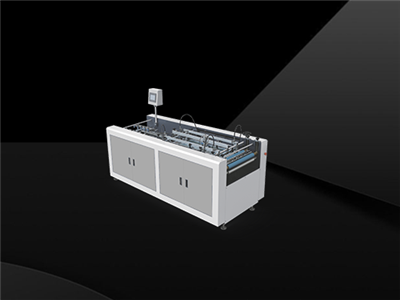

Hey there! I'm a supplier of box machines, and I've been in this industry for quite some time. Today, I'm super excited to share with you how box machines fold those nifty boxes. It's a process that involves a blend of precision engineering and some pretty cool technology.
Let's start with the basics. Box machines are designed to take flat sheets of cardboard or paperboard and transform them into fully - formed boxes. There are different types of box machines out there, each with its own unique way of folding boxes, but we'll cover the general steps that most of them follow.
First off, the raw material, which is usually a large sheet of cardboard, is loaded into the machine. The cardboard has to be of the right thickness and quality for the specific type of box being made. Once it's in the machine, the first thing that often happens is scoring. Scoring is like making a weak line on the cardboard so that it can be folded easily along that line. It's kind of like how you'd bend a piece of paper more easily if you first crease it with a fingernail.
The scoring process is crucial because it determines the shape and the quality of the final fold. Box machines use sharp blades or wheels to create these scores. The depth and width of the scores are carefully calibrated depending on the material and the design of the box. For example, a heavier - duty cardboard might need a deeper score to fold properly.
After scoring, the next step is cutting. The machine has to cut the cardboard into the right shape and size for the box. Some machines use guillotine - style cutters, which are like big, sharp knives that come down and slice through the cardboard. Others use rotary cutters, which are circular blades that spin and cut as they move along the cardboard. The cutting process is very precise, as any deviation from the intended shape can lead to a box that doesn't fit together correctly.
Once the cardboard is scored and cut, it's time for the actual folding. This is where the magic really happens. There are different mechanisms for folding, and one of the most common is the use of folding bars. These bars are strategically placed in the machine and push the cardboard along the scored lines to create the folds.
Some box machines also use suction cups to hold the cardboard in place during the folding process. This ensures that the cardboard doesn't move around and that the folds are accurate. The suction cups can be adjusted depending on the size and shape of the cardboard.
For more complex box designs, there might be multiple folding steps. For instance, a box with a lid might require several folds to create the lid and the box body separately before they are joined together. In these cases, the machine has to be programmed to perform each fold in the correct sequence.
Now, let's talk about some of the specialized machines that play a role in the box - making process. One such machine is the Automatic Corner Pasting Machine. This machine is used to paste the corners of the box together. After the box is folded, the corners need to be secured so that the box holds its shape. The automatic corner pasting machine applies adhesive to the corners and then presses them together to create a strong bond.
Another important machine is the Automatic Cardboard Grooving Machines. Grooving is similar to scoring but is often used for creating more complex shapes or for adding additional strength to the box. These machines can create grooves in multiple directions, which is useful for making boxes with unique designs.
And then there are the Rigid Box Wrapping Machines. Once the box is folded and assembled, these machines are used to wrap the box with decorative paper or other materials. This not only makes the box look more attractive but also adds an extra layer of protection.
In addition to these machines, modern box machines are often equipped with advanced control systems. These systems use sensors and computer programming to ensure that each step of the folding process is accurate. For example, sensors can detect if the cardboard is misaligned or if there is a problem with the scoring or cutting. The control system can then adjust the machine's operation accordingly.
One of the benefits of using box machines is the speed and efficiency they offer. A single box machine can produce hundreds or even thousands of boxes in a day, depending on its size and complexity. This is a huge advantage for businesses that need to produce large quantities of boxes quickly.
Another advantage is the consistency. Box machines can produce boxes with the same high - quality folds and dimensions every time. This is important for businesses that require uniformity in their packaging.
However, like any piece of machinery, box machines require regular maintenance. The blades and wheels need to be sharpened or replaced periodically, and the sensors and control systems need to be calibrated. This ensures that the machine continues to operate at its best and produces high - quality boxes.
If you're in the business of making boxes or need a reliable supplier of box machines, I'd love to have a chat with you. Whether you're just starting out and need a basic machine or you're looking to upgrade your existing equipment, I can offer you a range of solutions that fit your needs and budget. Don't hesitate to reach out for more information or to discuss your specific requirements.
In conclusion, the process of how box machines fold boxes is a fascinating combination of mechanical engineering, precision cutting, and automated folding. With the help of specialized machines and advanced control systems, these machines can produce high - quality boxes quickly and consistently. If you're interested in taking your box - making business to the next level, consider investing in the right box machines.
References


- Packaging Machinery Handbook: A comprehensive guide to the different types of packaging machines, including box machines.
- Industry research reports on the box - making and packaging industry.