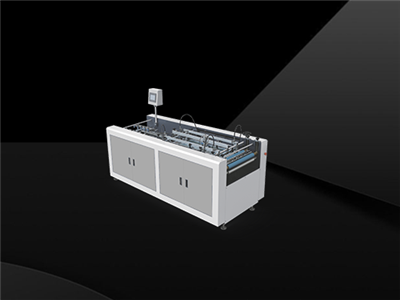

Hey there! I'm a supplier of box machines, and I often get asked, "Do box machines need special training to operate?" Well, let's dive right into this topic and break it down.


First off, it's important to understand that box machines come in all shapes and sizes, each with its own set of features and functions. From simple manual machines to high - tech automated ones, the training requirements can vary quite a bit.
Let's start with the basic manual box machines. These are the ones that are relatively easy to operate. They usually involve tasks like folding cardboard, attaching simple components, and maybe some basic cutting. For these types of machines, the learning curve is not too steep. Most people can pick up the basic operation within a few hours or a couple of days. You just need to understand how the different parts of the machine work together. For example, knowing how to adjust the folding guides to get the right angle for the box corners. However, even with these simple machines, there are some safety aspects that need to be learned. Operators should know how to handle the sharp cutting tools safely and how to avoid getting their fingers caught in the moving parts. So, while it might not require weeks of training, a short orientation session is definitely a good idea.
On the other hand, when we talk about automated box machines, things get a bit more complex. Automated machines, like the Automatic Tape Pasting Machine, are designed to perform multiple tasks with high precision and speed. These machines use advanced technology such as sensors, motors, and computerized controls. To operate them effectively, operators need to have a good understanding of how the machine's software works. They need to be able to set up the machine for different box sizes and types, which involves inputting the correct dimensions and settings into the control panel.
For instance, the Four Edge Folding Machine is a highly automated piece of equipment. It can fold the edges of a box with great accuracy. But to make it work properly, operators need to know how to load the cardboard sheets correctly, adjust the folding pressure, and troubleshoot any minor glitches that might occur during the operation. This kind of knowledge usually comes from a more in - depth training program.
Another example is the Automatic Cardboard Grooving Machines. These machines are used to create grooves in cardboard, which are essential for making the boxes fold neatly. Operating these machines requires an understanding of the grooving depth, the spacing between the grooves, and how to align the cardboard accurately. A mistake in these settings can lead to poorly made boxes, which can waste materials and time.
The complexity of these automated machines also means that operators need to be trained in maintenance and troubleshooting. They should know how to perform basic maintenance tasks like cleaning the machine, lubricating the moving parts, and replacing worn - out components. In case of a breakdown, they should be able to identify the problem and take the necessary steps to fix it or at least report it accurately to the technical support team.
Special training for box machines offers several benefits. Firstly, it improves the quality of the boxes produced. Well - trained operators are more likely to set up the machines correctly, which results in boxes that meet the required standards. This is crucial for businesses that rely on the quality of their packaging to attract customers. Secondly, training reduces the risk of accidents. Operators who know how to use the machines safely are less likely to get injured on the job. This not only protects the workers but also helps the company avoid costly lawsuits and downtime due to accidents.
Moreover, trained operators can increase the efficiency of the production process. They can operate the machines at their optimal speed and make adjustments quickly when needed. This means that more boxes can be produced in less time, which is a significant advantage in a competitive market.
Now, you might be wondering where to get this special training. As a box machine supplier, I offer training programs for our customers. We have a team of experienced technicians who can provide both on - site and online training. On - site training allows the operators to learn directly on the machines they will be using, which is very practical. Online training, on the other hand, is more flexible and can be accessed from anywhere. We also provide training materials such as manuals and video tutorials to help the operators learn at their own pace.
If you're in the market for box machines and are concerned about the training requirements, don't worry. We're here to support you every step of the way. Whether you're a small business just starting out or a large corporation looking to upgrade your production line, we can provide the right machines and the necessary training.
In conclusion, while basic box machines might not require extensive training, more advanced automated machines definitely do. Special training is essential for ensuring the quality of the boxes, the safety of the operators, and the efficiency of the production process. If you're interested in learning more about our box machines or our training programs, feel free to reach out to us. Let's start a conversation and see how we can help you take your box - making business to the next level.
References
General knowledge about box machine operation and industry best practices.