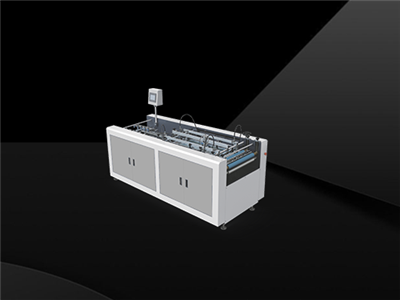

Hey there! As a supplier of Rigid Box Machines, I often get asked about the differences between different models. Well, let me break it down for you in a simple and easy - to - understand way.
1. Functionality and Purpose
First off, the functionality of rigid box machines can vary a great deal. Some machines are designed for specific tasks, while others are more all - in - one solutions.
Specialized Machines
Let's start with the specialized ones. For example, the Automatic Cardboard Grooving Machines are exactly what their name suggests. These machines are focused on creating grooves in cardboard. Grooves are super important in rigid box production as they allow the cardboard to be folded neatly and accurately. They can work with different thicknesses of cardboard and can create grooves in both single and dual directions. This precision is crucial for making high - quality boxes, especially those with complex folding patterns.
Another specialized machine is the Semi Auto Corner Pasting Machine. As the name implies, it's mainly used for pasting the corners of the rigid boxes. This step is vital for ensuring the structural integrity of the box. The semi - auto part means that some manual intervention might be required, like placing the box parts in the right position. But once that's done, the machine takes over and applies the paste evenly and firmly at the corners.
All - in - One Machines
On the other hand, there are all - in - one rigid box machines. These bad boys can handle multiple steps in the box - making process. They can cut the cardboard, create grooves, fold the edges, and even paste the corners, all in one go. They're great for large - scale production where you need to churn out a high volume of boxes quickly. These machines are usually more expensive, but they save a lot of time and labor in the long run.
2. Automation Level
The automation level of rigid box machines is another major differentiator.
Fully Automatic Machines
Fully automatic machines are the cream of the crop. They require minimal human intervention. Once you set up the machine with the right parameters like box size, cardboard thickness, and folding pattern, it can run on its own for long periods. These machines are equipped with advanced sensors and control systems that ensure consistent quality. They're ideal for large factories with a high demand for boxes. However, they are also more complex to operate and maintain. If something goes wrong, it might take a skilled technician to fix it.
Semi - Automatic Machines
Semi - automatic machines, as mentioned earlier, need some human input. For example, in the case of the semi - auto corner pasting machine, an operator has to place the box parts in the machine. These machines are a bit more flexible in some ways because an operator can make adjustments on the fly. They're also more affordable than fully automatic machines, which makes them a good choice for small to medium - sized businesses.
3. Production Capacity
The production capacity of different rigid box machine models can vary significantly.


High - Capacity Machines
High - capacity machines are designed for large - scale production. They can produce hundreds or even thousands of boxes per hour. These machines are usually large in size and require a dedicated space in the factory. They're often used by big box manufacturers who supply to major retailers. For example, a fully automatic all - in - one machine can produce a large number of standard - sized boxes in a short time, meeting the high demand of big - name brands.
Low - Capacity Machines
Low - capacity machines are more suitable for small businesses or for making custom - made boxes. They might produce only a few dozen boxes per hour. These machines are more compact and can be set up in a smaller workshop. They're great for businesses that focus on unique, high - end boxes with special designs.
4. Precision and Quality
The precision and quality of the boxes produced by different machine models also differ.
High - Precision Machines
High - precision machines are capable of creating boxes with very accurate dimensions and smooth finishes. They use advanced cutting and folding technologies to ensure that every box is identical. For example, the Four Edge Folding Machine can fold the edges of the cardboard with extreme precision, resulting in a professional - looking box. These machines are often used for making boxes for luxury products like jewelry or high - end electronics.
Standard - Precision Machines
Standard - precision machines are good enough for general - purpose boxes. They can produce boxes that meet the basic requirements but might not have the same level of perfection as high - precision machines. They're more cost - effective and are commonly used for packaging everyday items like food products or household goods.
5. Cost
Cost is always a major factor when choosing a rigid box machine.
High - End Machines
High - end machines, such as fully automatic all - in - one machines with high precision and large production capacity, are expensive. They require a significant upfront investment. However, they can save money in the long run through increased efficiency and reduced labor costs. They're suitable for established businesses with a stable demand for boxes.
Budget - Friendly Machines
Budget - friendly machines, like semi - automatic or low - capacity models, are more affordable. They're a great option for startups or small businesses that are just getting into the box - making industry. They allow businesses to start small and gradually expand as their demand grows.
So, there you have it! These are the main differences between different models of rigid box machines. Whether you're a small business looking to start making boxes or a large factory aiming to upgrade your equipment, there's a machine out there that's perfect for you.
If you're interested in learning more about our range of rigid box machines or if you want to discuss your specific needs, don't hesitate to reach out. We're here to help you find the best machine for your business.
References
- Industry knowledge and experience as a Rigid Box Machine supplier.
- Observations from working with different clients in the box - making industry.