
Hey there! I'm a supplier of rigid boxes, and today I wanna chat about the limitations of these seemingly perfect packaging solutions. Rigid boxes are super popular for their sturdiness and high - end look, but they're not without their drawbacks.
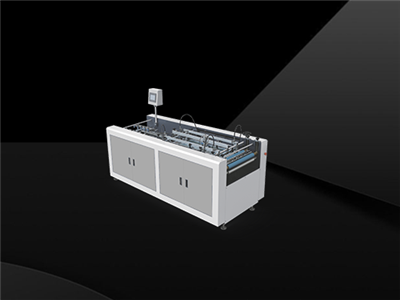
Let's start with the cost. Rigid boxes are significantly more expensive to produce compared to other types of packaging, like corrugated boxes or simple paper bags. The materials used in rigid boxes, such as thick cardboard, high - quality paperboard, and sometimes even wood or metal inserts, drive up the cost. Also, the manufacturing process is more complex. We need special machines like Cardboard V Grooving Machines to create the precise folds and shapes. These machines are costly to buy and maintain, and they consume a fair amount of energy. All these factors contribute to a higher price tag for the end - product. For small businesses or startups with tight budgets, this can be a major deterrent. They might love the look of rigid boxes, but they just can't afford to use them for their products.
Another limitation is the storage space. Rigid boxes are bulky. Unlike some other types of packaging that can be flattened and stored easily, rigid boxes maintain their shape even when empty. This means they take up a lot of room in warehouses or storage facilities. If you're a business that needs to store a large quantity of these boxes, you'll need a big space, which can lead to higher storage costs. And if you're shipping the boxes, the large volume also means higher shipping costs. You can't stack them as efficiently as you would with more flexible packaging options, so you end up paying for more space on trucks or in shipping containers.
The environmental impact is also a concern. While some rigid boxes can be recycled, the process is often more complicated than that of regular cardboard boxes. The combination of different materials, like the paperboard, glue, and sometimes plastic or metal parts, makes it difficult to separate and recycle them properly. Plus, the production of rigid boxes usually requires more resources and energy, which contributes to a larger carbon footprint. In today's world, where consumers are becoming more environmentally conscious, this can be a turn - off for some customers.
Customization can be a double - edged sword. On one hand, rigid boxes offer a high degree of customization in terms of shape, size, and design. But on the other hand, it can be time - consuming and expensive. Designing and producing custom - made rigid boxes requires a lot of planning and coordination. You need to work closely with the supplier to create the right design, and any changes in the design can lead to delays and additional costs. For example, if you want a unique shape for your rigid box, the supplier might need to create special molds or use different manufacturing techniques, which can take time and money.
The production time is relatively long. Since rigid boxes involve multiple steps in the manufacturing process, from cutting and grooving the cardboard to pasting the corners and wrapping the box, it takes longer to produce them compared to other types of packaging. If you have a tight deadline for a product launch or a large order, you might run into problems. The use of machines like Semi Auto Corner Pasting Machine and Rigid Box Wrapping Machines helps speed up the process, but it still can't match the quick turnaround time of simpler packaging options.
Durability, while often seen as an advantage, can also be a limitation in some cases. Rigid boxes are very strong and can protect the products inside well. However, this also means they're not very flexible. If the product inside the box changes shape slightly during transportation or storage, the rigid box might not be able to adapt. This can lead to damage to the product or the box itself. For example, if a product expands due to changes in temperature or humidity, the rigid box might crack or break.
Now, despite these limitations, rigid boxes still have a lot of advantages. They offer a high - end look that can really make a product stand out on the shelves. They're great for luxury items, gifts, and high - value products. And as a supplier, we're constantly working on ways to overcome these limitations. We're looking into more cost - effective manufacturing methods, more efficient storage solutions, and ways to reduce the environmental impact.
If you're considering using rigid boxes for your products, I encourage you to reach out. We can have a detailed discussion about your specific needs, and see how we can work together to minimize the impact of these limitations. Whether you're a small business looking for an affordable option or a large company with high - volume orders, we're here to help. Contact us to start a procurement discussion and find the best rigid box solution for you.
References


- General knowledge of the packaging industry
- Experience as a rigid box supplier