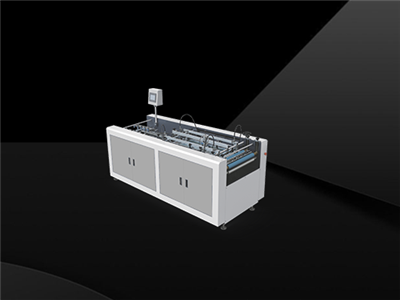

Hey there! As a supplier of Box Machines, I've had my fair share of experiences with all sorts of box - making challenges. One of the most common questions I get from customers is how to adjust the folding angle of boxes in Box Machines. Well, in this blog, I'm gonna walk you through the whole process.
First things first, let's understand why adjusting the folding angle is so important. The folding angle of a box determines its overall shape and functionality. Whether you're making a simple cardboard box for shipping or a fancy rigid box for luxury products, getting the folding angle right is crucial. A wrong angle can lead to boxes that don't close properly, look uneven, or even fall apart during use.
Understanding Your Box Machine
Before you start adjusting the folding angle, you need to have a good grasp of your Box Machine. Different machines have different mechanisms for adjusting angles. Some machines come with digital controls where you can input the exact angle you want. Others have manual settings, like adjustable levers or screws.
If you're using a Rigid Box Forming Machines, these are usually high - end machines designed for making rigid boxes. They often have precise digital controls that allow you to set the folding angle with great accuracy. You can usually find the angle adjustment settings on the machine's control panel. Just enter the desired angle, and the machine will do the rest.
On the other hand, if you're working with an Automatic Cardboard Grooving Machines, these machines are mainly used for grooving cardboard before folding. Adjusting the folding angle here might involve adjusting the depth and position of the grooves. A deeper groove can make the cardboard fold more easily at a sharper angle, while a shallower groove might result in a more gradual fold.
Step - by - Step Guide to Adjusting the Folding Angle
1. Prepare Your Materials
Gather all the materials you'll need, including the cardboard or paper for the box, any tools required for adjustment (like screwdrivers if it's a manual machine), and a protractor to measure the angle accurately.
2. Check the Machine's Manual
Even if you think you know your machine well, it's always a good idea to refer to the manual. The manual will have specific instructions on how to adjust the folding angle for your particular model. It might also have some safety precautions you need to follow.
3. Make Initial Adjustments
If your machine has digital controls, start by entering a test angle. For manual machines, use the adjustable levers or screws to make a rough adjustment. For example, if you want a 90 - degree fold, start by setting the machine to what you think is close to 90 degrees.
4. Test the Folding
Take a piece of cardboard and run it through the machine. Check the folding angle using a protractor. If the angle is off, don't worry. This is just a test run.
5. Fine - Tune the Adjustment
Based on the test result, make small adjustments. If the angle is too sharp, decrease the setting on digital machines or adjust the levers or screws to make the fold more gradual. If the angle is too wide, increase the setting or make the necessary manual adjustments.
6. Repeat the Testing Process
Keep testing and adjusting until you get the perfect folding angle. It might take a few tries, but patience is key here.
Factors That Affect the Folding Angle
1. Material Thickness
Thicker materials like rigid cardboard will require different adjustments compared to thinner paper. Thicker materials are less flexible, so you might need to make the grooves deeper or adjust the machine to apply more pressure during folding.
2. Machine Wear and Tear
Over time, the parts of your machine can wear out. This can affect the accuracy of the folding angle. Regular maintenance, such as lubricating moving parts and replacing worn - out components, is essential to ensure consistent folding angles.
3. Environmental Conditions
Humidity and temperature can also impact the folding angle. High humidity can make cardboard softer and more likely to fold at a different angle than normal. Try to keep your working environment as stable as possible.
Using an Automatic Tape Pasting Machine in Conjunction with Angle Adjustment
When you've got the perfect folding angle, you might need to use an Automatic Tape Pasting Machine to seal the box. This machine can be adjusted to work in harmony with the folding angle. Make sure the tape is applied at the right position and with the right amount of pressure.
Troubleshooting Common Issues
1. Uneven Folds
If you're getting uneven folds, it could be due to an uneven distribution of pressure on the cardboard. Check if there are any blockages in the machine or if the rollers are not aligned properly.


2. Inconsistent Folding Angles
This might be caused by a problem with the machine's calibration. You may need to recalibrate the machine according to the manual's instructions.
3. Difficult Folding
If the cardboard is hard to fold, it could be because the grooves are not deep enough or the machine is not applying enough pressure. Adjust the groove depth or increase the pressure settings.
Conclusion
Adjusting the folding angle of boxes in Box Machines is a skill that takes time and practice. But with the right knowledge and a bit of patience, you can achieve perfect folds every time. Whether you're using a Rigid Box Forming Machines, Automatic Cardboard Grooving Machines, or an Automatic Tape Pasting Machine, understanding how to adjust the folding angle is crucial for high - quality box production.
If you're in the market for new Box Machines or need more advice on adjusting folding angles, don't hesitate to reach out. We're here to help you make the most of your box - making process. Contact us for a detailed discussion on your specific needs and let's start a great partnership in the box - making industry.
References
- Manufacturer's manuals of Box Machines
- Industry best practices for box - making processes