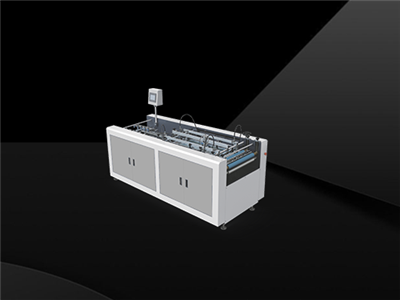

In the fast - paced world of packaging production, box machines play a pivotal role. As a well - established supplier of box machines, I've witnessed firsthand the evolution of these essential tools. One question that frequently arises among our clients is whether box machines have automatic error - detection systems. In this blog, I'll delve into this topic, exploring the significance, functionality, and benefits of such systems in box machines.
The Significance of Automatic Error - Detection Systems in Box Machines
In the packaging industry, precision and efficiency are of utmost importance. A single error in the box - making process can lead to significant losses, including wasted materials, increased production time, and potential damage to the reputation of the manufacturer. Automatic error - detection systems are designed to address these issues by identifying and alerting operators to problems as soon as they occur.
These systems are crucial for maintaining high - quality standards. For example, in the production of rigid boxes, the slightest misalignment or defect can render the final product unusable. By detecting errors early, manufacturers can minimize waste and ensure that only products meeting the highest quality standards leave the production line.
How Automatic Error - Detection Systems Work
Automatic error - detection systems in box machines employ a variety of technologies to identify problems. One common approach is the use of sensors. These sensors can be placed at various points along the production line to monitor different aspects of the box - making process.
For instance, optical sensors can be used to detect misaligned components, such as flaps or panels. These sensors work by emitting a beam of light and measuring the reflection. If the reflection pattern changes, indicating a misalignment, the sensor sends a signal to the control system, which can then take appropriate action, such as stopping the machine or adjusting the position of the component.
Another type of sensor commonly used is the proximity sensor. These sensors can detect the presence or absence of objects at specific locations. In a box - making machine, proximity sensors can be used to ensure that all required materials, such as cardboard sheets or adhesives, are present and in the correct position before the next step of the process is initiated.
In addition to sensors, some box machines also use vision systems for error detection. Vision systems are essentially cameras that capture images of the boxes as they move along the production line. Advanced image - processing algorithms then analyze these images to identify any defects, such as scratches, dents, or incorrect printing.
Benefits of Automatic Error - Detection Systems
Improved Quality Control
As mentioned earlier, automatic error - detection systems are essential for maintaining high - quality standards. By detecting and correcting errors in real - time, manufacturers can ensure that every box produced meets the required specifications. This not only reduces waste but also enhances customer satisfaction, as customers receive products that are free from defects.
Increased Efficiency
These systems also contribute to increased efficiency in the production process. By quickly identifying and resolving errors, production downtime is minimized. Operators can address issues promptly, rather than waiting for a large number of defective boxes to be produced before realizing there is a problem. This leads to higher production rates and lower overall production costs.
Cost Savings
The cost savings associated with automatic error - detection systems are significant. By reducing waste, manufacturers save on raw materials. Additionally, the reduction in production downtime means that more boxes can be produced in a given period, increasing revenue. Moreover, the improved quality of the products can lead to fewer returns and customer complaints, further saving on costs.
Types of Box Machines with Automatic Error - Detection Systems
Automatic Box Making Machine
The Automatic Box Making Machine is a prime example of a box machine equipped with advanced error - detection systems. These machines are designed to produce a wide range of box types, from simple folding cartons to complex rigid boxes. The automatic error - detection systems in these machines ensure that every step of the box - making process, from cutting and folding to gluing and assembly, is carried out accurately.
Automatic Cardboard Grooving Machines
Automatic Cardboard Grooving Machines are used to create grooves in cardboard sheets, which are essential for folding the cardboard into boxes. These machines use error - detection systems to ensure that the grooves are cut at the correct depth and width. Any deviation from the specified parameters can be detected immediately, allowing for adjustments to be made to maintain the quality of the grooves.


Cardboard V Grooving Machines
Cardboard V Grooving Machines are specialized machines for creating V - shaped grooves in cardboard. Similar to other box machines, these machines are equipped with error - detection systems to ensure the accuracy of the grooving process. This helps to prevent issues such as uneven folds or weak joints in the final box.
Challenges and Limitations
While automatic error - detection systems offer numerous benefits, they also face some challenges and limitations. One of the main challenges is the complexity of the technology. These systems require a high level of technical expertise to install, operate, and maintain. Manufacturers may need to invest in training their operators to ensure that they can effectively use and troubleshoot the error - detection systems.
Another limitation is the cost of implementing these systems. The sensors, vision systems, and associated software can be expensive, especially for small - to - medium - sized manufacturers. However, it's important to note that the long - term benefits, such as improved quality and efficiency, often outweigh the initial investment.
Conclusion
In conclusion, automatic error - detection systems are an essential feature of modern box machines. They play a crucial role in ensuring the quality, efficiency, and cost - effectiveness of the box - making process. As a supplier of box machines, we are committed to providing our customers with the latest technology in error - detection systems to help them stay competitive in the market.
If you're interested in learning more about our box machines with automatic error - detection systems or are considering a purchase, we invite you to contact us for a detailed discussion. Our team of experts is ready to assist you in finding the perfect solution for your packaging needs.
References
- Packaging Machinery Manufacturers Institute (PMMI). "Advances in Packaging Technology." PMMI Annual Report, 20XX.
- Smith, J. "The Role of Error - Detection Systems in Modern Manufacturing." Journal of Manufacturing Technology, Vol. XX, No. XX, 20XX.
- Brown, A. "Quality Control in the Packaging Industry." Packaging World Magazine, March 20XX.